

A few weeks ago, while setting all the preparations to receive the printed version of Barões de Tamancos, I found myself not only re-reading the research material but taking the (somewhat) bold move to re-open the Shoe Research, too. Research dynamics are, indeed, peculiar: while there is always More To Know, revisiting a research topic can feel as tempting as opening a stimulating version of the Pandora Box, with new ideas coming instead of curses.
And one perspective that seems interesting enough is the (re)building of the commercial circuit of models and brands, during the first half of the 19th century - an early move related to modern globalization and setting something similar to our contemporary “brand awareness”1.
Reopening the Pandora (shoe)box
Now, while the idea of a Shopping Circuit is not exactly new, I really got fond of a different kind of piece of evidence: the paper labels glued inside the shoes’ insoles, especially during the first half of the 1800s, when the main models available, on both sides of the Atlantic, were variations of ballerinas and slippers. And they are going to be our main guides for today (just after the premiere of Bridgerton’s season 3!)2.
In a period where different fabrics, especially fragile ones, such as silk, were widely used as the shoes’ raw material, gluing a paper label can be seen as a strategic solution to attribute a commercial origin to the pairs. They could be inserted once the shoe preparation was done and did not demand different kinds of expertise, such as special insole printing or leather printing. However, I haven’t found many traces (yet) about how or where these labels were printed, for instance.
Another surprising info is that, even centuries after the shoes’ production, the labels are often in good condition, and can still be found glued to the insoles. How come they didn’t fade out or were ripped while the shoes were worn out, or the owners simply did not take them off? I don’t know, but, lucky for us researchers, this happened and this piece of information can be used as more than a “decorative feature” of the pairs.

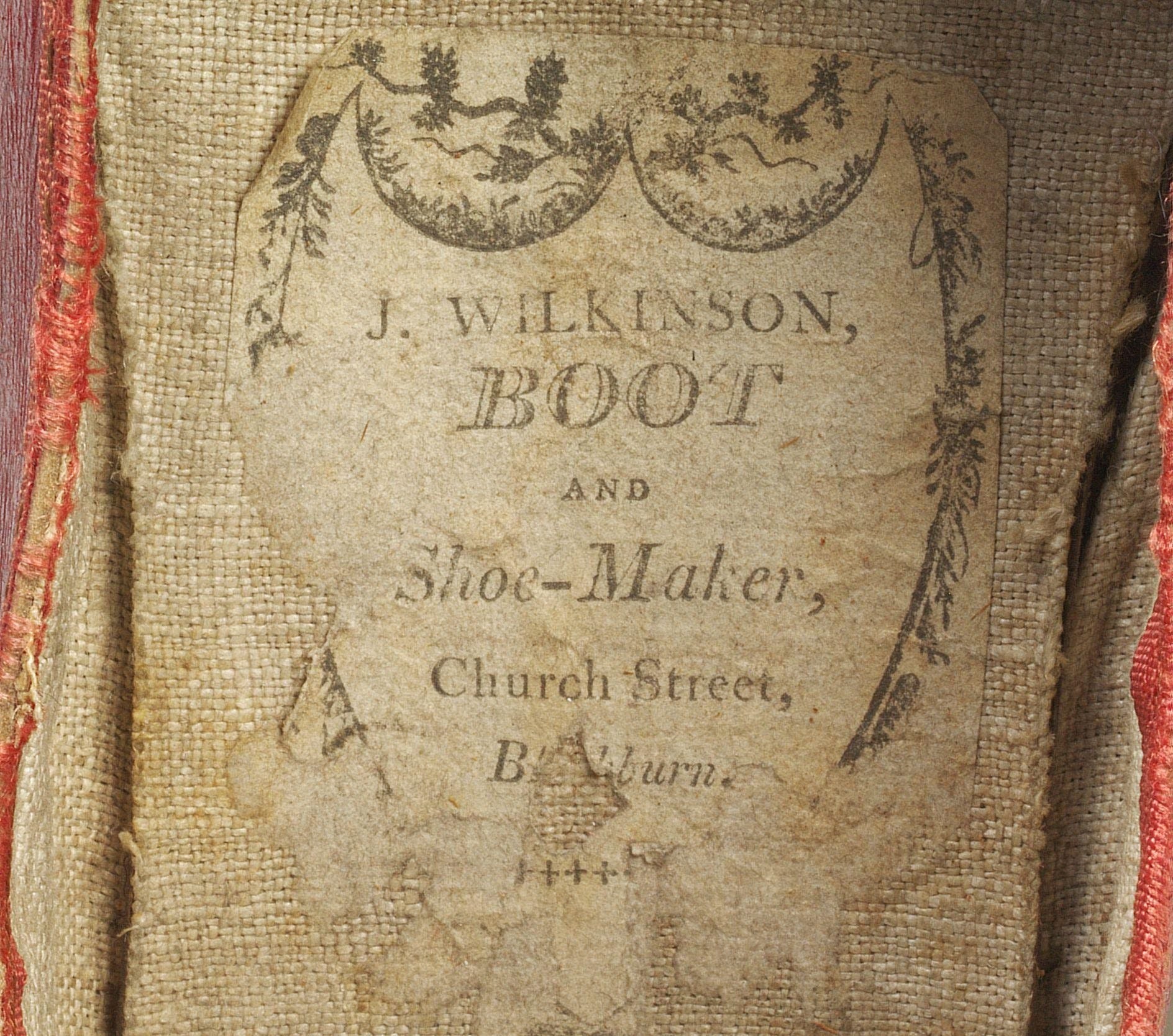
One of the oldest pairs I found, while researching, was this red leather one, from a boot/shoemaker called J. Wilkinson, from Blackburn, a town in Northern England. While this indicated that the early years of the 19th century were already familiar with shoe labels, most of the pairs can be (broadly) dated from the 1820s to the 1860s, and we started seeing other kinds of label printing in the 1870s.
From castles to street shops
We could expect to find very objective information in these labels: the name of the shoemakers, which worked as the shoe brand, and its address. But, often, the labels also stress the “brand legitimacy” for these workers, as providers for aristocratic networks.
One of the most straightforward examples on how to do this can bee seen in this pair by British shoemaker Ridley, from circa 1845-1855.
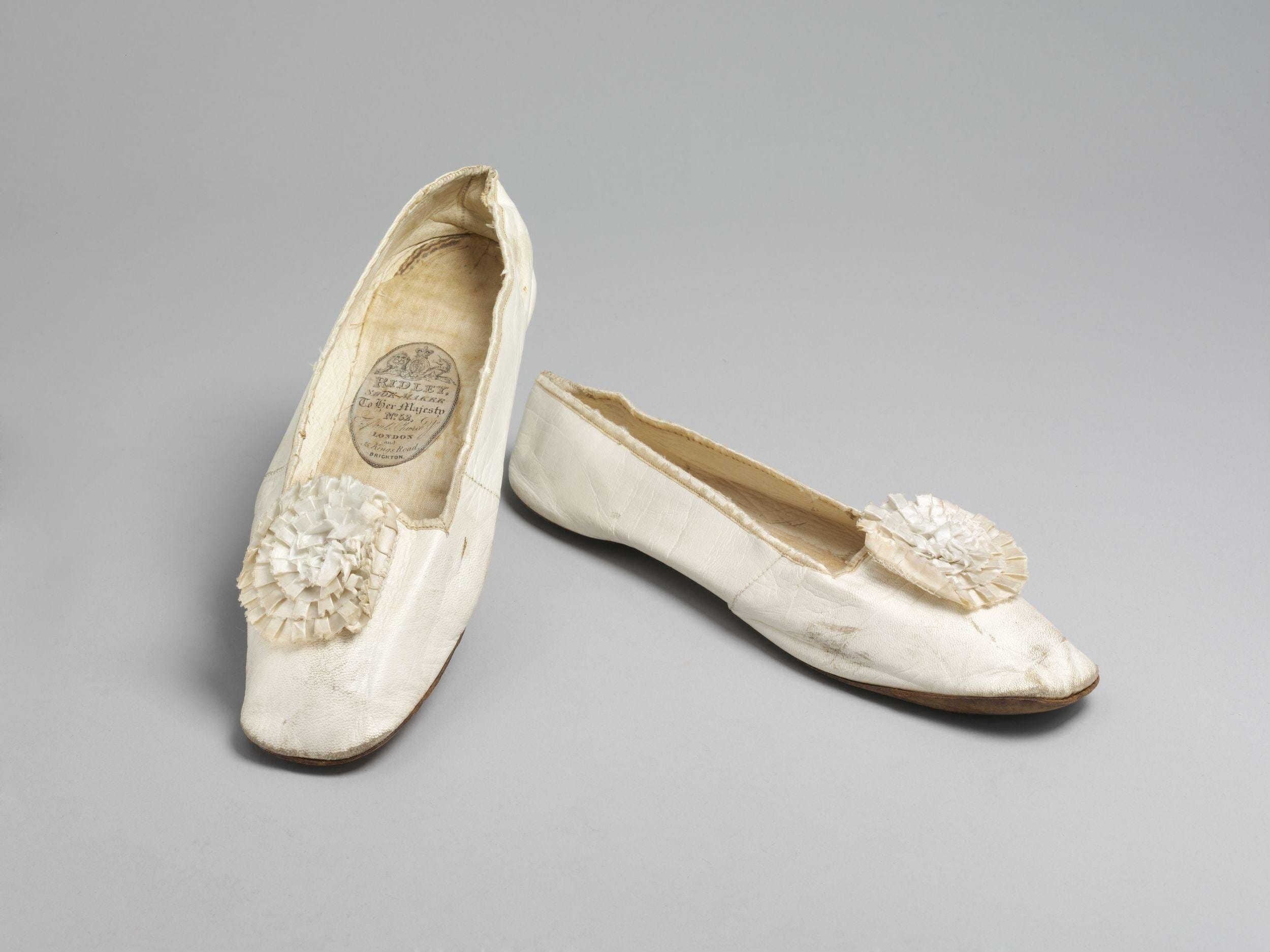
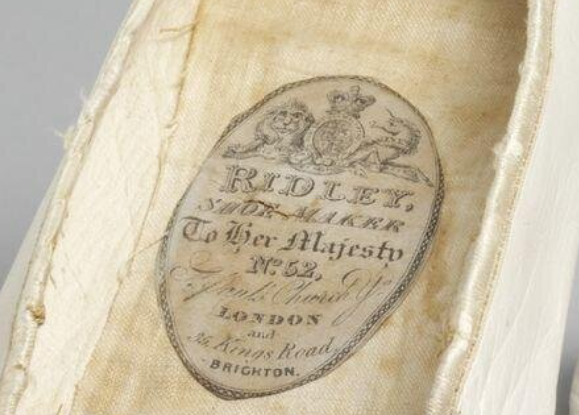
I really like that, beyond the direct association with the Queen herself, this label even found the place to insert a formal illustration of a lion, a unicorn and a crowned globe.
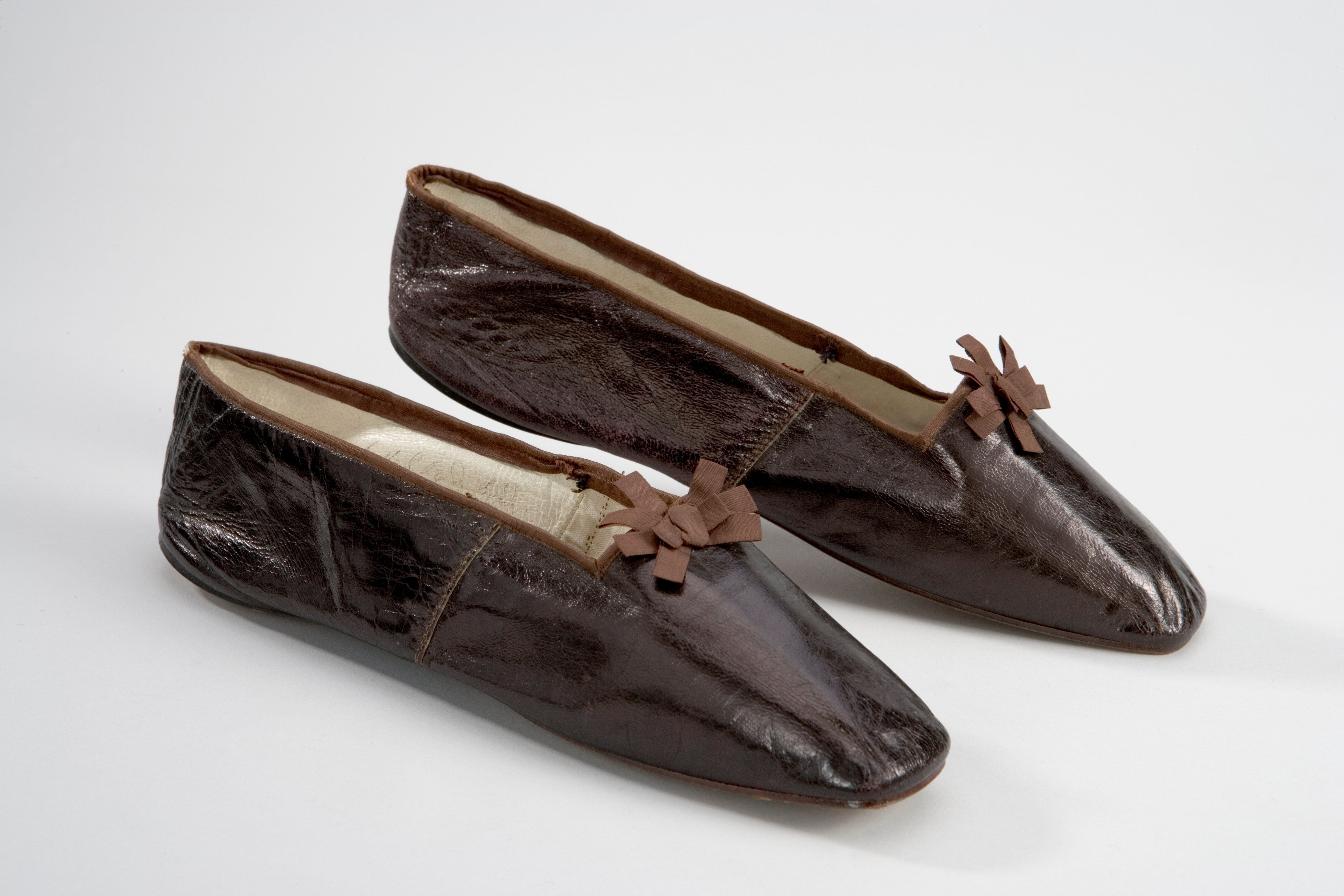
Another interesting case is John Theodore Schenk, a France-based shoemaker who was known as “L’Allemand” (“The German”), and expanded his work way beyond the national frontiers. He provided shoes for Queen Desideria of Sweden. One of the pairs is a goat leather shoe, with violet-brown color, from the 1820s. The leather lining is written in ink: “S M L R de Suède No 1”. And the insole label - from which we sadly have no picture! - states: “Schenck, known as The German, shoemaker, authorized by H.R.H. Mlle d’Orléans, 10 rue du 29 Juillet ci-devant 32, rue de Rivoli à Paris”3.
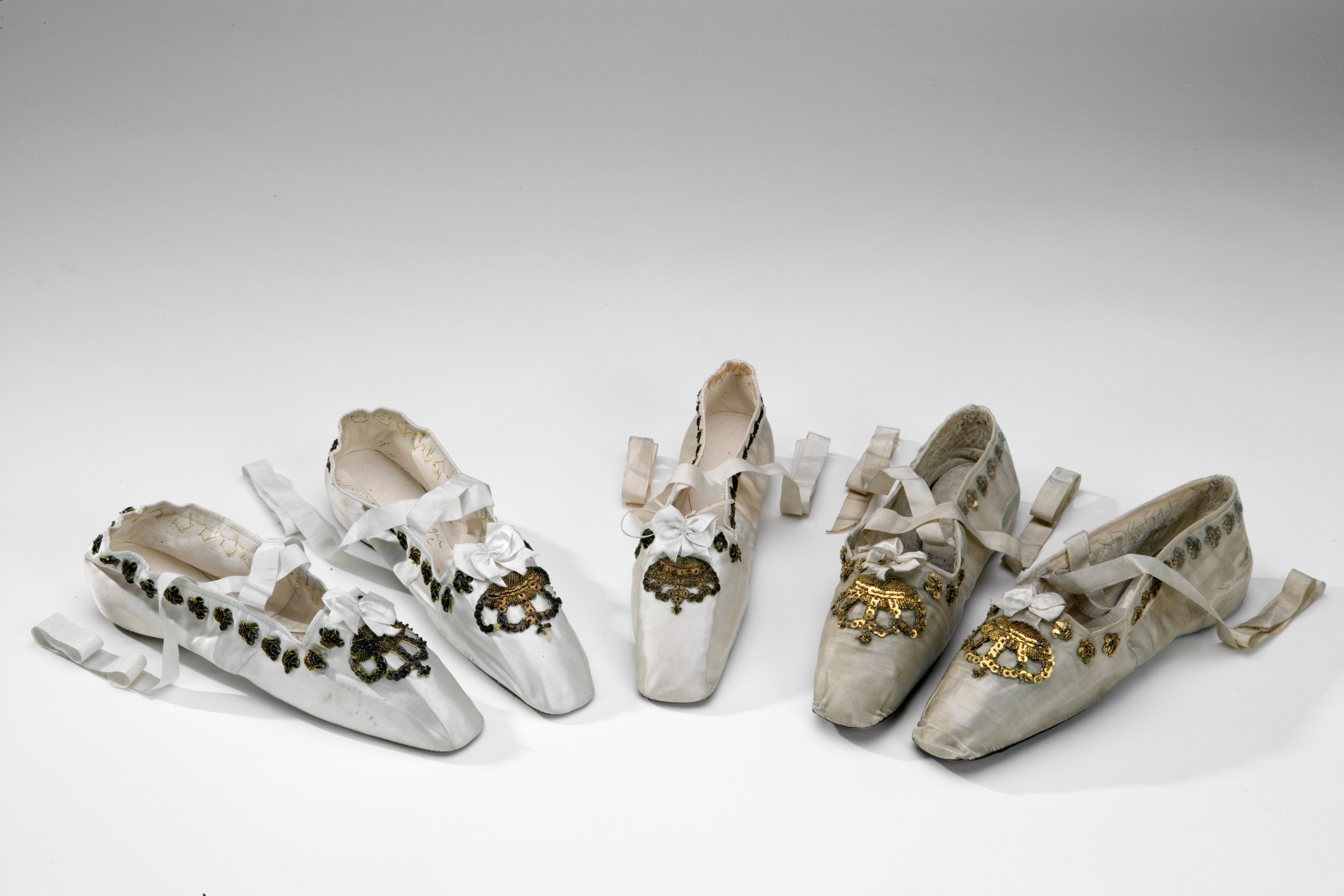
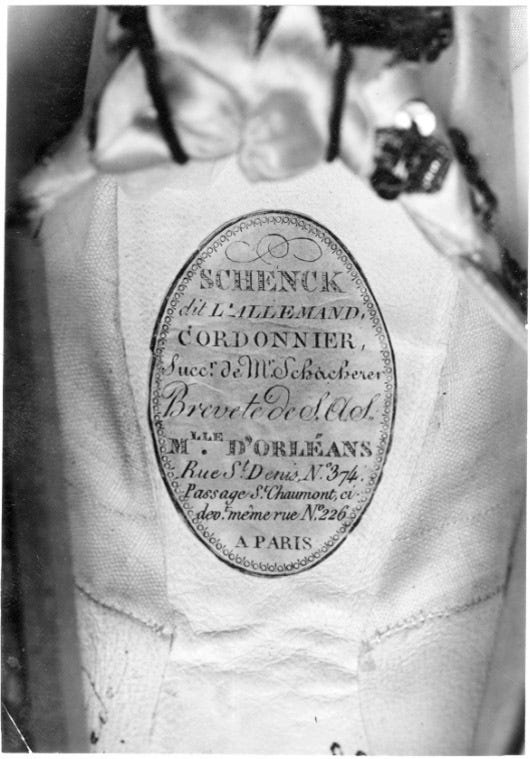
The commercial ties between Schenk and Queen Desideria must have been quite positive, even long-lasting, because, in 1829, the same shoemaker created a few pairs intended for the coronation of Queen Desideria - not only for her, but for a few other ladies who would attend the ceremony4. However, they show no signs of having been worn. The label highlighted Schenk’s position as a “successor of Mr Schacherer” in the shoemaking business, stressed that he still was a breveté from H.R.H. Mlle d’Orléans, and indicated a different address from the first pair5.
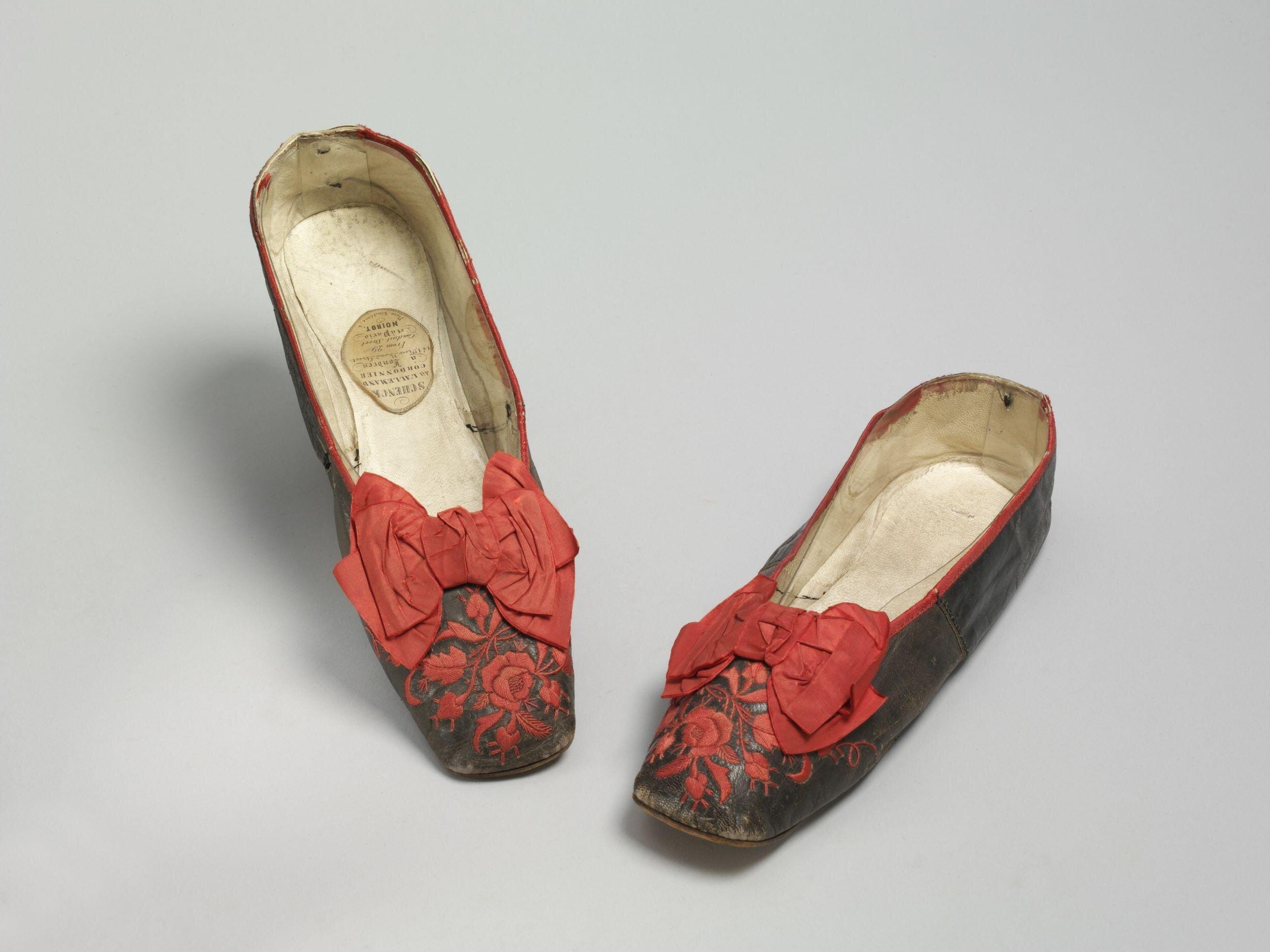
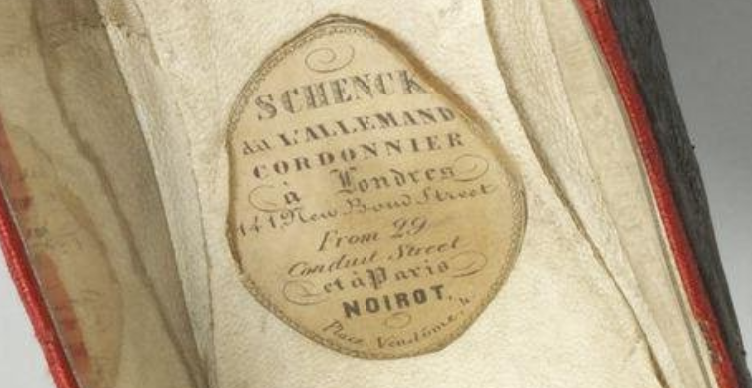
At some point, Schenk expanded his physical business and crossed the English Channel. He opened a store in London, in a strategic address - the corner between New Bond Street and Conduit Street, in Mayfair6. Meanwhile, as we see in this pair from the 1860s, his Parisian address was at the core of the chic perimeter of the town, at 4, Place Vendôme, being sold by fellow Noirot7.
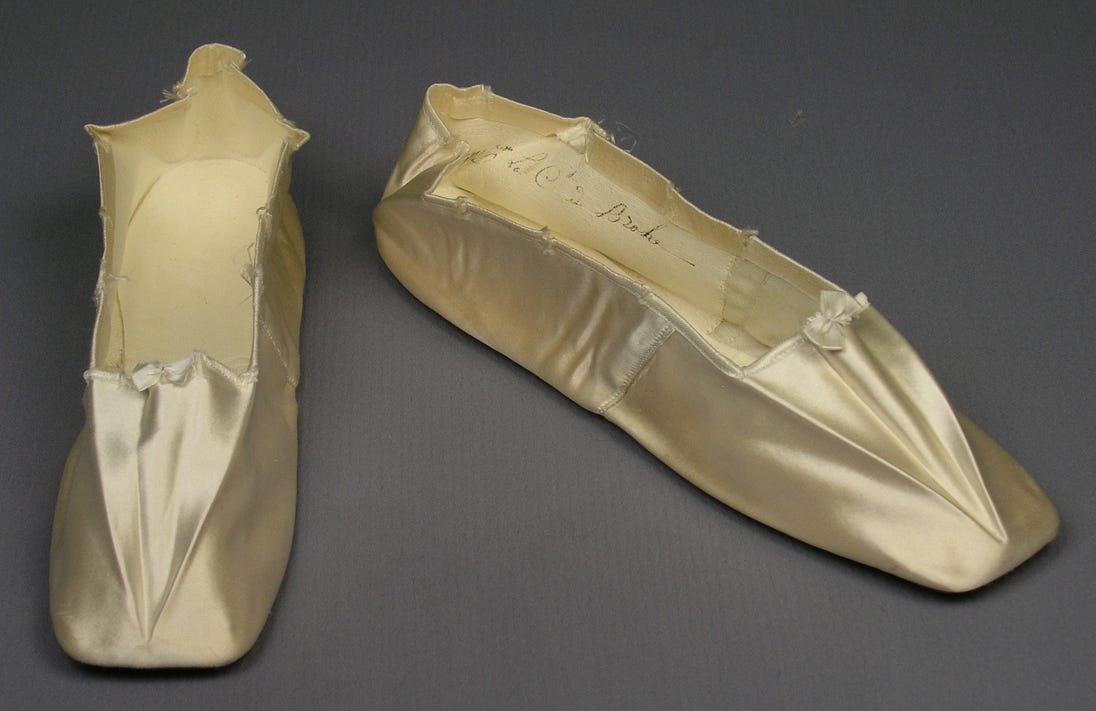
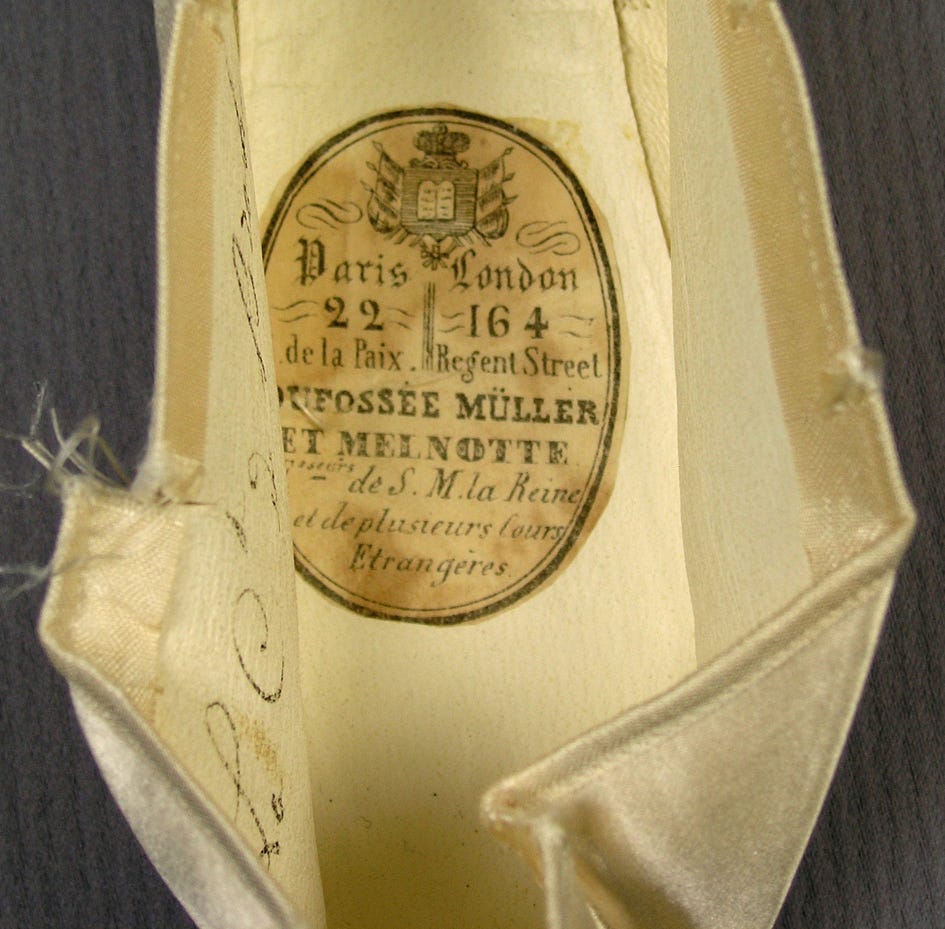
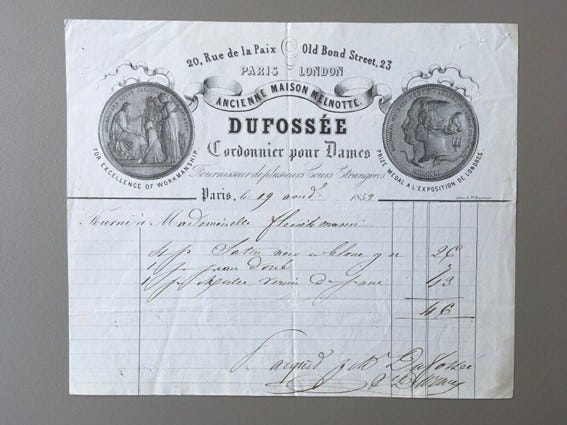
One last pair for this analysis is this white silk bought by Countess de Brahe, also from Sweden, probably in 1835. They come from the French maison Dufossée, Müller and Melnotte. Just as Schenk stated his position as a successor of a (probably) prestigious shoemaker, Dufossée became known as the successor of Melnotte shoemakers. They are also established in central addresses, both in London and Paris; however, their clientele goes beyond the physical reach of the stores. The label clearly states their status as “providers for several foreign courts” and shows a tiny illustration of something close to a heraldic image. Dufossée did not hesitate, later, to state in the printed invoice that the maison was also formally awarded several prizes and participated to different Exhibitions, such as the London ones. The cute detail is that the Countess wrote her name on the shoes, as sometimes the owners used to do.
There is still a lot to find out about these versatile labels. Just as the shops change with time, they change, too; their illustrations and their printing are as informative as the text they show.
See Alexander, N., & Doherty, A. M. (2021). Overcoming institutional voids: Maisons spéciales and the internationalisation of proto-modern brands. Business History, 63(7), 1079–1112. https://doi.org/10.1080/00076791.2019.1675640.
Speaking of Bridgerton, this interview with the series costume designer, Ellen Mirojnick, is quite interesting. This could very well be a topic for another week, discussing historical accuracy and other points.
In French in the label: "SCHENCK DIT L'ALLEMAND, CORDONNIER, BREVETÉ DE S. A. S. Mlle D'ORLEANS, 10 RUE DU 29 JUILLET CI-DEVANT 32, RUE DE RIVOLI A PARIS".
According to the Livrustkammaren museum, they belonged to Queen Desideria (2 pairs), Estrid Hylin f. Rundquist, Margret Hylin, and Johanna Cornelia Soret.
In French in the label: “SCHENK // dit L'ALLEMAND, // CORDONNIER, // Succr de Mr Schacherer // Breveté de S.A.S. // MLLE D'ORLEANS // Rue St Denis, No 374 // Passage St Chaumont, ci // dev. même rue, No 226 // A PARIS”.
See the Post Office London Directory from 1843, p.361.
Noirot & Butz are mentioned as shoe sellers in the 1862 edition from the Annuaire et almanach du commerce, de l'industrie, de la magistrature et de l'administration: ou almanach des 500,000 adresses de Paris, des départementes & des pays étrangers, p.701.